

Introduction
In today’s digital-first economy, having an online business bank account is no longer optional—it’s a foundational requirement for running a scalable, compliant, and efficient business. Whether you’re launching a startup, managing a dropshipping store, or running a global eCommerce brand, your financial infrastructure determines how smoothly your operations run.
Traditional banking systems often slow businesses down with paperwork, long approval times, and limited digital capabilities. That’s where online banking steps in. An online business bank account allows entrepreneurs to open, manage, and optimize their finances entirely online—often within minutes. It supports seamless payment processing, expense tracking, international transactions, and integration with accounting tools.
If you’re targeting markets like the USA, UK, or Europe, choosing the right online checking account or online bank can directly impact your growth, tax compliance, and profitability. This guide will walk you through everything—from how these accounts work to how to choose the best online bank, avoid costly mistakes, and future-proof your business finances for 2026 and beyond.
Online Business Bank Account Explained
An online business bank account is a digital financial account designed for businesses to manage transactions, payments, and cash flow entirely online without visiting a physical bank branch.
Quick Summary:
- Open accounts remotely in minutes
- Manage payments, invoices, and transfers online
- Integrate with accounting and eCommerce platforms
- Lower fees than traditional banks
- Ideal for startups, freelancers, and global businesses
Comparison Table:
| Feature | Online Business Bank Account | Traditional Bank Account |
|---|---|---|
| Account Opening | Instant / Online | In-branch required |
| Fees | Low / Transparent | Higher / Hidden |
| Accessibility | 24/7 | Limited hours |
| Integration | High (apps, tools) | Limited |
| Speed | Fast transactions | Slower processing |
What Is an Online Business Bank Account?
An online business bank account is a financial account specifically tailored for businesses but operated entirely through digital platforms. Unlike personal accounts, these accounts separate your business finances from personal funds, ensuring proper bookkeeping and legal compliance. Businesses use these accounts to receive payments, pay suppliers, manage payroll, and monitor cash flow in real time.
According to https://en.wikipedia.org/wiki/Online_banking, online banking enables financial transactions over the internet, eliminating the need for in-person visits to banks. For entrepreneurs, this means faster operations and fewer administrative bottlenecks. These accounts often come with features such as multi-user access, automated expense categorization, invoicing tools, and integrations with platforms like Shopify or WooCommerce.
For example, if you run an eCommerce store like https://websarb.com/, you can connect your online bank account directly to your payment gateway, streamlining transactions and reporting. Additionally, many online banks offer APIs and integrations that traditional banks lack, making them ideal for tech-driven businesses. Whether you’re opening a business account online for freelancing, SaaS, or dropshipping, this financial tool acts as your central hub for all monetary operations.
How It Works
Opening and using an online business bank account is straightforward but powerful. The process typically starts with digital verification, in which you submit business documents such as registration certificates, tax IDs, and proof of identity.
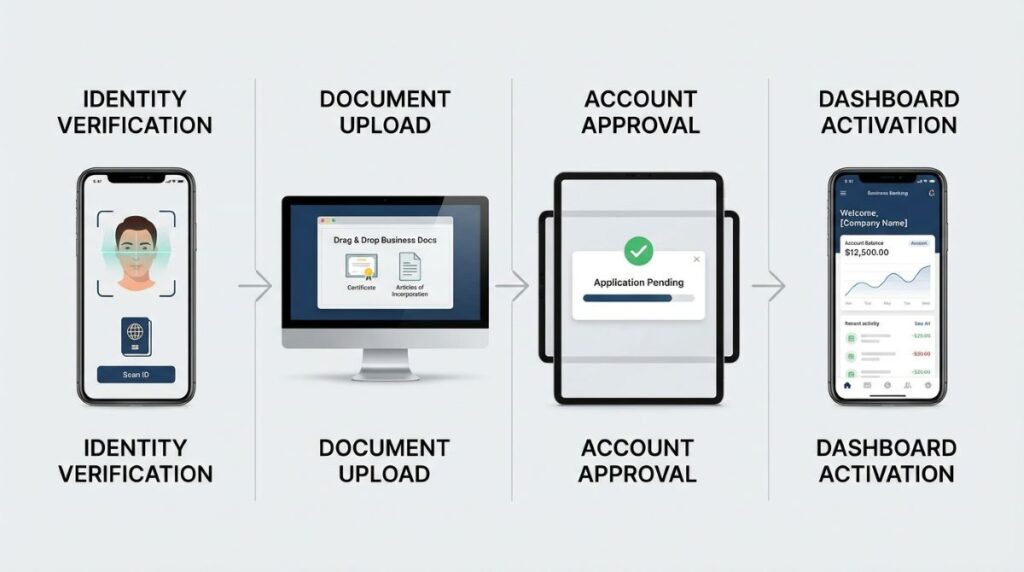
Once approved, you gain access to a dashboard that centralizes all your financial activities. Here’s how it works step by step:
- Choose a provider offering online checking account services
- Submit your business and identity documents
- Complete KYC (Know Your Customer) verification
- Activate your account and receive virtual or physical debit cards
- Start sending and receiving payments
Transactions are processed electronically, often in real time or within one business day. Many online banks also support multi-currency accounts, which are crucial for international sellers. According to https://www.consumerfinance.gov/, digital banking services improve transparency and reduce transaction friction. For example, if you operate a dropshipping store targeting the US, you can accept payments in USD while managing your funds globally. Integration is another major advantage. Tools like QuickBooks or Stripe can sync directly with your bank account, reducing manual work. If you’re building an online store, you can explore resources like https://websarb.com/category/shopping/ to understand how banking integrates with your sales funnel. Ultimately, the system is designed for speed, automation, and scalability.
Benefits and Limitations
Online business bank accounts offer significant advantages, but they’re not without limitations. Understanding both sides helps you make an informed decision.
Benefits:
- Fast account setup (often under 24 hours)
- Lower fees compared to traditional banks
- Real-time financial tracking
- Easy integration with digital tools
- Accessibility from anywhere
- Multi-currency support for global business
Limitations:
- Limited physical support (no branches)
- Cash deposits can be difficult
- Some banks restrict high-risk industries
- Dependence on internet access
For example, a freelancer in Pakistan working with US clients benefits from instant payments and currency management. However, a retail business that relies heavily on cash may face limitations. Trusted financial platforms like https://www.nerdwallet.com often highlight that online banks excel in digital convenience but may lack in-person services. The key is aligning your business model with the banking structure.
How to Choose the Best Option
Choosing the best online bank requires a strategic approach. Not all online business bank accounts are created equal, and selecting the wrong one can lead to operational inefficiencies. Here’s a decision framework:
Key Factors to Consider:
- Fees (monthly, transaction, withdrawal)
- Supported currencies
- Integration capabilities
- Customer support quality
- Compliance with your target market (US, UK, EU)
Decision Checklist:
- Do you need international payments?
- Will you integrate with accounting software?
- Do you require multiple user access?
For example, a Shopify store owner targeting the US should prioritize banks offering USD accounts and Stripe integration. Meanwhile, a content creator may prioritize low fees and simplicity. You can also explore digital business strategies at https://websarb.com/category/finance/ to align your financial tools with your growth strategy. Choosing the right bank is not just about features—it’s about scalability and long-term alignment.
Common Mistakes to Avoid
Many entrepreneurs rush into opening a business account online without proper research, leading to costly mistakes.
Top Mistakes:
- Choosing based on low fees only
- Ignoring integration capabilities
- Not checking international transfer costs
- Mixing personal and business finances
- Overlooking compliance requirements
For instance, selecting a bank without multi-currency support can significantly increase conversion fees. Another common mistake is ignoring customer support—critical when dealing with payment disputes or technical issues. Avoid these pitfalls by conducting a thorough comparison before committing.
Cost / Fees Breakdown
Understanding fees is essential to maximizing profitability. Online banks are generally cheaper, but hidden costs can still exist.
Typical Fees:
- Monthly maintenance: $0–$30
- Transaction fees: $0.10–$1 per transaction
- International transfers: 1–3%
- ATM withdrawals: $2–$5
Example Scenario:
A dropshipping business processing 500 orders monthly may incur:
- Transaction fees: $50–$200
- Payment gateway fees: 2.9% per sale
- Currency conversion: 1–2%
To minimize costs, choose banks with transparent pricing and free domestic transactions. Always calculate total operational cost, not just monthly fees.
Best Use Cases (2026 Forward-Looking)
The demand for online banking is growing rapidly, especially with the rise of remote work and global commerce.
Best Use Cases:
- e-commerce businesses (Shopify, WooCommerce)
- Freelancers and digital nomads
- SaaS startups
- Dropshipping businesses
- Agencies managing international clients
In 2026, AI-driven financial tools and automation will further enhance these accounts. Businesses will rely more on real-time analytics, automated tax calculations, and predictive cash flow management. Online banking will become the backbone of digital entrepreneurship.
Expert Tips / Recommendations
To maximize the value of your online business bank account, follow these expert strategies:
- Use separate accounts for operations and savings
- Automate expense tracking
- Integrate with accounting software
- Monitor cash flow weekly
- Choose banks with strong security protocols
A practical tip: Always maintain a buffer fund equivalent to 2–3 months of expenses. This ensures stability during slow sales periods.
Comparison: Online vs Traditional Banking
Choosing between online and traditional banking depends on your business model.
| Criteria | Online Banking | Traditional Banking |
|---|---|---|
| Speed | Fast | Slow |
| Accessibility | Global | Local |
| Fees | Lower | Higher |
| Support | Digital | In-person |
| Scalability | High | Moderate |
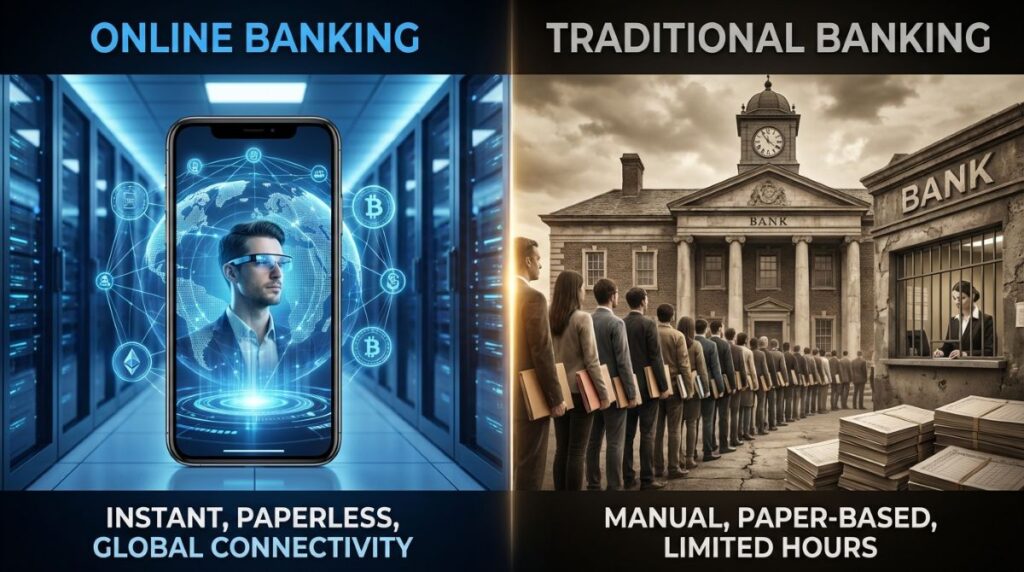
For digital businesses, online banking is clearly superior. However, businesses that deal in physical cash may still benefit from traditional banks.
FAQ
1. What is an online business bank account?
An online business bank account is a digital financial account designed for businesses to manage transactions, payments, and finances entirely online. It eliminates the need for in-person bank visits and offers tools such as invoicing, expense tracking, and integrations with accounting software. These accounts are ideal for modern businesses operating in digital environments, including freelancers, e-commerce stores, and startups targeting global markets.
2. How can I open a business account online instantly?
To open a business account online instantly, choose a digital bank, submit your business registration documents, verify your identity, and complete the KYC process. Many banks approve accounts within minutes or hours. Ensure your documents are accurate to avoid delays.
3. What is the best online bank for small businesses?
The best online bank depends on your needs. Look for low fees, integration capabilities, multi-currency support, and strong customer service. Popular options often include fintech banks designed for startups and global transactions.
4. Are online business bank accounts safe?
Yes, most online banks use advanced encryption, two-factor authentication, and regulatory compliance to ensure security. Always choose a bank regulated by financial authorities.
5. Can I use an online checking account for business?
Yes, many banks offer online checking accounts specifically designed for businesses. These accounts allow daily transactions, payments, and cash flow management.
6. What documents are required to open an online business bank account?
Typically, you need business registration documents, tax ID, proof of address, and personal identification. Requirements vary by country and bank.
7. Do online banks charge hidden fees?
Some do, especially for international transfers and currency conversions. Always review the fee structure before opening an account.
8. Is an online business bank account suitable for international businesses?
Yes, these accounts are ideal for global businesses due to multi-currency support and international payment capabilities.
9. Can freelancers open a business account online?
Absolutely. Freelancers benefit from separating personal and business finances, improving tax reporting, and professionalism.
10. How does online banking help business growth?
Online banking improves efficiency, reduces costs, enables automation, and provides real-time financial insights, all of which contribute to business growth.
Conclusion: Online Business Bank Account
An online business bank account is a critical tool for modern entrepreneurs aiming to scale efficiently in a global digital economy. From faster transactions to seamless integrations and lower fees, it offers unmatched advantages over traditional banking. However, success lies in choosing the right provider, understanding fee structures, and aligning your banking setup with your business model.
As we move into 2026, businesses that leverage digital banking tools effectively will gain a competitive edge in speed, efficiency, and financial control. If you’re serious about building a scalable, international business, now is the time to open and optimize your online banking system.

Subscribe to receive in-depth reviews, honest comparisons, and practical recommendations that help you choose the right products with confidence.
Newsletter coming soonNo spam. No hype. Just clear, helpful insights.