

Introduction:
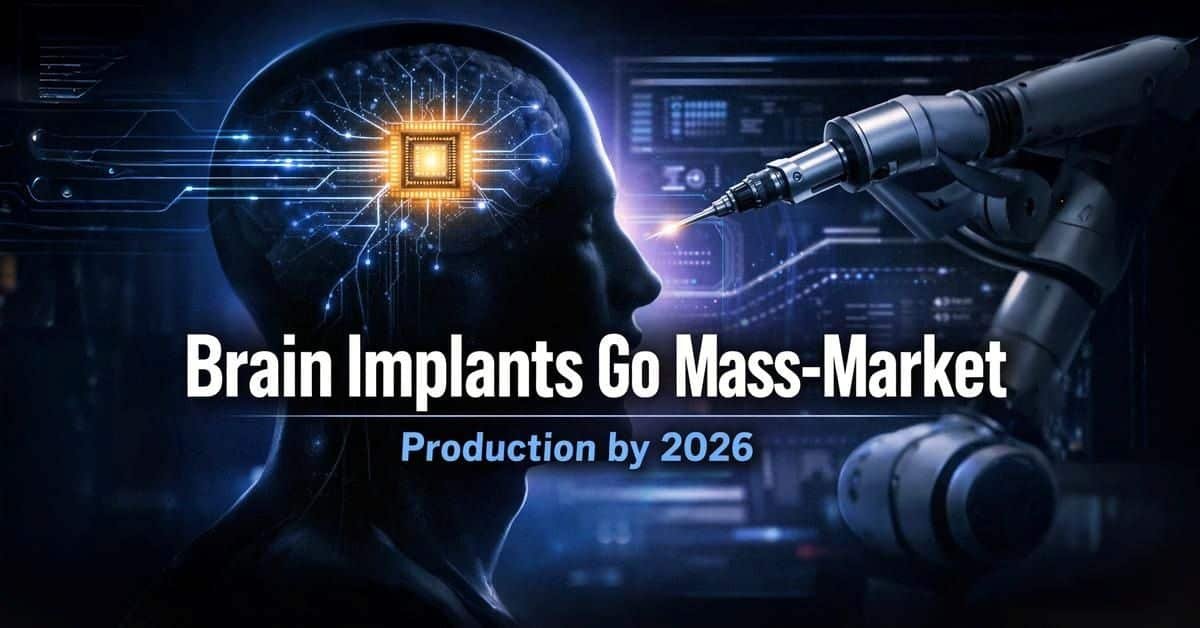
The future of human–computer interaction may be closer than many expected. Neuralink brain implant technology, once considered a distant science-fiction concept, is now moving toward large-scale production. According to statements from Elon Musk, Neuralink plans to begin high-volume manufacturing of brain-computer interface devices by 2026, alongside a transition to fully automated brain surgery.
If achieved, this milestone could redefine medicine, disability treatment, and the broader future of neurotechnology, while raising new ethical, regulatory, and societal questions.
What Is Neuralink and Why It Matters
Neuralink is developing implantable brain-computer interface (BCI) devices designed to allow humans to interact directly with computers using neural signals. The company’s primary near-term focus is medical: helping people with paralysis regain the ability to communicate and control digital or physical tools.
The long-term ambition, however, is far broader—extending human cognition, restoring sensory function, and eventually enabling seamless integration between the human brain and artificial intelligence systems.
High-Volume Production Planned for 2026
In a recent statement, Elon Musk confirmed that Neuralink intends to move into high-volume production of its brain implant devices by 2026. This would represent a dramatic shift from limited clinical deployment to scalable manufacturing.
Equally significant is the plan to rely on automated brain surgery, replacing manual surgical procedures with robotics designed for speed, consistency, and precision. Automation could reduce surgical risk, lower costs, and make widespread implantation feasible.
If successful, this transition would mark one of the most important technological leaps in the history of brain computer interface development.
From Regulatory Rejection to Human Trials
Neuralink’s path has not been smooth. In 2022, the company faced a setback when the U.S. Food and Drug Administration initially rejected its application for human trials due to safety concerns.
After addressing these issues, Neuralink began Neuralink human trials in 2024. Since then, progress has accelerated.
As of late 2024, 12 individuals worldwide with severe paralysis have received Neuralink implants. These patients are reportedly able to control digital devices—and in some cases physical tools—using thought alone.
This real-world validation is a major milestone for paralysis treatment technology.
How the Neuralink Brain Implant Works
The Neuralink brain implant consists of ultra-thin, flexible threads inserted into specific regions of the brain. These threads detect neural signals and transmit them wirelessly to external devices.
Key components include:
- A coin-sized implant embedded in the skull
- Microscopic electrodes that read neuron activity
- Wireless communication with computers or mobile devices
- AI-driven decoding of neural signals
The procedure is designed to be minimally invasive, especially once automated surgical systems are fully implemented.
Automated Brain Surgery: Why It’s Critical
Manual brain surgery is slow, expensive, and highly dependent on surgical expertise. Neuralink’s move toward automated brain surgery is essential for scaling the technology.
Robotic systems can:
- Insert electrodes with micron-level precision
- Reduce human error
- Shorten operation time
- Improve consistency across procedures
Automation is the key reason high-volume production by 2026 is even conceivable.
Funding and Financial Momentum
Neuralink secured $650 million in funding in a mid-2024 investment round, signaling strong investor confidence despite the technical and ethical challenges involved.
This capital is expected to support:
- Manufacturing infrastructure
- Robotics development
- Expanded clinical trials
- Regulatory compliance
- Long-term research into cognitive enhancement
Strong financial backing is essential for a project operating at the intersection of medicine, AI, and hardware innovation.
Medical Impact: A New Era for Paralysis Treatment
For patients with spinal cord injuries or neurological disorders, the implications are profound.
Current early-stage results suggest that Neuralink implants can restore basic digital interaction, allowing patients to type, browse the internet, or control assistive devices using thought alone.
As the technology matures, potential applications include:
- Restoring speech for patients with ALS
- Enabling mobility control for quadriplegic patients
- Treating neurological disorders
- Reconnecting damaged neural pathways
This positions Neuralink at the forefront of paralysis treatment technology.
Beyond Medicine: The Broader Vision
While medical use cases provide ethical and regulatory justification, Elon Musk has repeatedly emphasized a broader goal: preventing humans from becoming obsolete in an AI-dominated future.
By creating a direct neural interface, Neuralink could theoretically allow humans to:
- Interact with AI systems in real time
- Augment memory and learning
- Communicate without language
- Experience new sensory inputs
These possibilities place Neuralink squarely at the center of debates about the future of neurotechnology.
Ethical and Safety Concerns
Despite the excitement, serious concerns remain.
Critics highlight risks including:
- Long-term brain safety
- Data privacy and neural surveillance
- Potential misuse by governments or corporations
- Social inequality if access is limited to elites
Regulatory oversight will be critical as Neuralink moves from trials to mass production.
Competition in the Brain-Computer Interface Space
Neuralink is not alone in the race to develop BCIs. Other companies and research institutions are working on non-invasive and implantable alternatives.
However, Neuralink’s combination of:
- Robotics
- AI-driven signal decoding
- Aggressive scaling strategy
gives it a unique position in the BCI ecosystem.
Can Neuralink Really Scale by 2026?
The timeline is ambitious.
To succeed, the brain-computer interface company must:
- Secure expanded regulatory approval
- Prove long-term safety
- Perfect automated surgery
- Build reliable manufacturing pipelines
- Maintain public trust
While challenges remain, the company’s recent progress suggests that large-scale deployment is no longer unrealistic.
What This Means for Society
If the brain-computer interface company achieves high-volume production, society will face unprecedented questions:
- Who owns neural data?
- Should brain enhancement be regulated?
- How do we ensure ethical access?
- Where does human end and machine begin?
These questions will shape policy, ethics, and technology for decades.
Conclusion: A Defining Moment for Human–Machine Integration
The announcement that Neuralink aims for mass production of brain implants by 2026 marks a defining moment in technological history. From early Neuralink human trials to real-world use by paralysis patients, the company has moved rapidly from concept to reality.
Whether Neuralink ultimately transforms medicine, augments human intelligence, or reshapes society will depend on how responsibly this powerful technology is deployed. One thing is clear: the era of direct brain-computer interfaces is no longer theoretical—it has already begun.
About the Author
WebsArb Editorial Team is a technology and business-focused editorial group that covers emerging innovations, artificial intelligence, neuroscience, startups, and global tech trends. The team delivers in-depth, research-backed articles designed to inform, analyze, and explain complex topics for a global audience. Learn more about WebsArb and explore related insights here:
[https://www.websarb.com/neuralink-brain-implant-production-2026/]
