


Table of Contents
Introduction
Financial planning is no longer optional in today’s unpredictable economic environment. Whether you’re earning your first salary, managing debt, or preparing for retirement, having a structured financial planning strategy determines your long-term financial success. Many individuals rely on guesswork, but without clear planning, they risk overspending, under-saving, and making poor investment decisions.
A comprehensive financial planning approach helps align income, expenses, investments, and future goals into a single roadmap. It also reduces financial stress and improves decision-making during economic downturns. In Tier-1 markets like the USA, UK, Canada, and Australia, professional financial planning is widely used by individuals to manage taxes, retirement savings, insurance, and wealth building.
However, even if you don’t hire retirement advisors immediately, understanding the fundamentals allows you to take control of your finances. This guide explains how financial planning works, its benefits, common mistakes, costs, and how to find a financial advisor.
By the end, you will understand how to build a long-term strategy, choose between private wealth managers or a personal finance expert, and make smarter money decisions for 2026 and beyond.
Financial planning is the process of organizing your income, expenses, savings, investments, and retirement goals into a structured strategy to achieve long-term financial security. It helps individuals manage risk, reduce debt, grow wealth, and prepare for future expenses such as retirement, education, and emergencies.
Key Elements:
• Budgeting and expense tracking
• Debt management strategy
• Investment planning
• Retirement savings plan
• Risk management and insurance
• Tax optimization strategy
Comparison Table: DIY vs Professional Financial Planning
| Feature | DIY Planning | Professional Advisor |
|---|---|---|
| Cost | Low | Medium to High |
| Expertise | Limited | High |
| Time Required | High | Low |
| Risk Management | Moderate | Strong |
| Retirement Strategy | Basic | Advanced |
What Is Financial Planning?
Financial planning is a structured process designed to help individuals achieve financial goals through disciplined money management. It includes budgeting, saving, investing, and retirement preparation. A personal finance expert often analyzes your income sources, liabilities, risk tolerance, and long-term objectives to create a roadmap.
For example, someone earning $70,000 annually may allocate 50% to expenses, 20% to savings, and 30% to investments. Over time, this systematic approach builds wealth. According to https://en.wikipedia.org/wiki/Financial_planning,
Financial planning integrates budgeting, investment planning, tax strategies, and retirement preparation into one cohesive strategy. The main purpose is not only wealth accumulation but also financial stability. Individuals who implement financial planning early often achieve better outcomes because compound growth plays a major role.
For example, investing $500 monthly at 8% return can grow significantly over 20 years. Additionally, financial planning helps avoid impulsive financial decisions and encourages disciplined investing. It also provides clarity during economic downturns.
How Financial Planning Works
Financial planning follows a step-by-step, structured framework. First, you evaluate your current financial position. This includes income, debts, assets, and expenses. Second, you define short-term and long-term goals, such as buying a house, funding education, or consulting a retirement-planning advisor. Third, you build a budget to control spending. Fourth, you create a savings strategy.
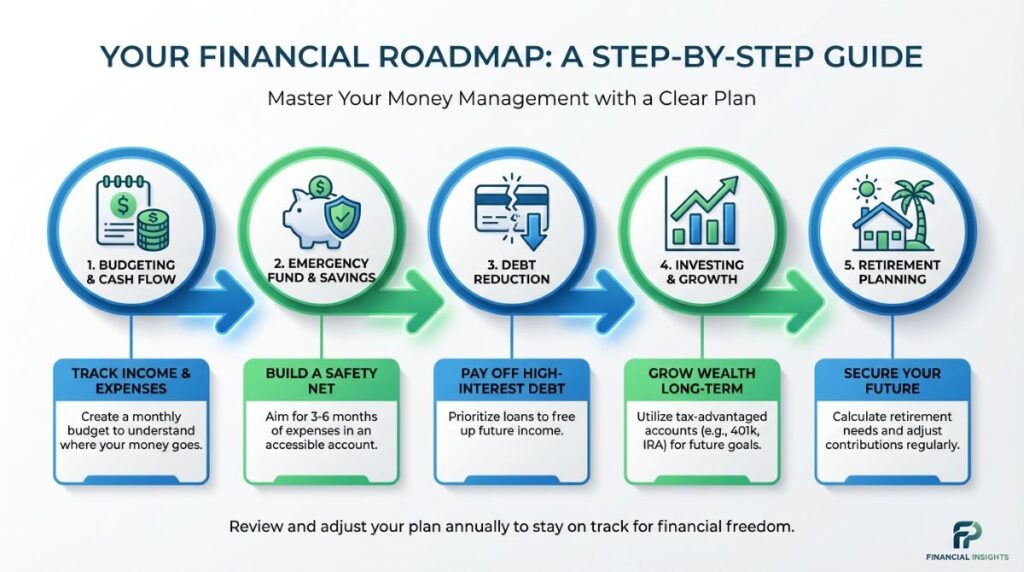
Fifth, investments are selected based on risk tolerance. Finally, periodic review ensures adjustments. For example, someone planning early retirement may allocate higher investment contributions. A fiduciary financial advisor near me often recommends diversification across stocks, bonds, and retirement accounts. Financial planning also incorporates emergency funds. Experts suggest maintaining 3-6 months of expenses. Government resources, such as https://www.consumerfinance.gov/,
Also emphasize budgeting and emergency savings. Financial planning is not a one-time process but a continuous process. As income increases, strategies evolve.
Benefits and Limitations
Financial planning offers several advantages. First, it improves financial discipline. Second, it reduces debt. Third, it helps achieve retirement goals. Fourth, it provides risk protection. Fifth, it improves tax efficiency. However, there are limitations. Planning requires consistency. Market volatility affects investments. Professional advisory services can be costly.
Despite limitations, the benefits outweigh the risks. For instance, individuals working with private wealth managers often achieve diversified portfolios. Financial planning also reduces the likelihood of emotionally driven decisions. It prevents panic selling during downturns. Additionally, it improves clarity in financial decisions. One limitation is that some people overestimate returns. A realistic approach is necessary.
How to Choose the Best Option
Choosing the right financial planning approach depends on complexity and income. If finances are simple, DIY planning may work. However, complex portfolios require professional help. When searching retirement planner near me, consider credentials. Look for CFP certification. Evaluate the fee structure. Understand whether the advisor is a fiduciary.
Ask about investment philosophy. Compare services. A financial advisor specializing in debt management may focus on debt-reduction strategies. Those seeking long-term wealth growth may prefer private wealth managers. You can explore expert resources at https://www.investopedia.com/financial-planning-4689743 for advisor selection tips.
Common Mistakes to Avoid
Many individuals fail at financial planning due to common mistakes. One mistake is ignoring budgeting. Another is delaying retirement savings. Third is high-interest debt accumulation. Fourth is a lack of diversification. Fifth is emotional investing.
For example, investing all savings in a single asset increases risk. Another mistake is failing to review plans annually. Financial conditions change. A retirement planning advisor often reviews portfolios yearly. Individuals should also avoid unrealistic expectations. Planning requires patience.
Cost / Fees Breakdown
Financial planning costs vary. Some advisors charge hourly fees. Others charge a percentage of assets. Robo-advisors offer lower fees. Typical fee structures include:
• Hourly fee: $150–$400
• Flat fee: $1,000–$3,000 annually
• Asset-based: 0.5%–1.5%
• Commission-based: varies
Hiring retirement advisors may seem expensive, but long-term benefits justify costs. A personal finance expert may help optimize taxes and investments.
Best Use Cases (2026 Forward Looking)
Financial planning is essential in 2026 due to inflation and economic uncertainty. Use cases include:
• Early career wealth building
• Retirement preparation
• Debt elimination strategy
• Business income planning
• Investment diversification
• Tax optimization
People planning retirement benefit from pension financial advice.
Expert Tips and Recommendations
Experts recommend automating savings. Diversify investments. Maintain an emergency fund. Review plan annually. Reduce high-interest debt first. Use tax-advantaged accounts. Work with a fiduciary financial advisor near me for unbiased advice.
Comparison: Online vs Traditional Financial Planning
| Feature | Online | Traditional |
|---|---|---|
| Cost | Low | Higher |
| Personalization | Moderate | High |
| Human Interaction | Limited | Strong |
| Accessibility | 24/7 | Appointment Based |
| Best For | Beginners | Complex Finances |
Frequently Asked Questions
What is financial planning, and why is it important?
Financial strategy is the process of managing income, expenses, investments, and goals to achieve financial stability. It helps reduce debt, build savings, and prepare for retirement. Without financial planning, individuals may overspend and fail to reach long-term goals. A structured plan improves decision-making and reduces financial stress.
How do I start financial planning?
Start by tracking income and expenses. Build an emergency fund. Set financial goals. Invest regularly. Review annually. Consider consulting retirement advisors for guidance.
How much does financial planning cost?
Costs vary depending on the advisor. Some charge hourly, others a percentage of assets. Robo-advisors are cheaper.
Should I hire a financial advisor?
If finances are complex, hiring an advisor helps. They provide tax planning, retirement strategies, and investment guidance.
What is the difference between financial planning and investing?
Financial strategy covers budgeting, savings, risk management, and investments. Investing is one component.
How often should I review the financial planning strategy?
Review annually or when major life changes occur.
Can financial planning help with debt?
Yes, a financial advisor for debt helps reduce liabilities.
Is financial planning only for wealthy individuals?
No, everyone benefits from structured planning.
Conclusion
Financial strategy is the foundation of long-term financial success. Whether you manage finances yourself or work with retirement advisors, structured planning helps reduce risk and grow wealth. By following disciplined strategies, avoiding common mistakes, and reviewing regularly, individuals can achieve financial independence. Start implementing a financial strategy today and build a secure financial future.
Websarb Useful Links:
https://websarb.com/
https://websarb.com/category/finance/
https://websarb.com/category/insurance/
